Explore the pupil’s experience
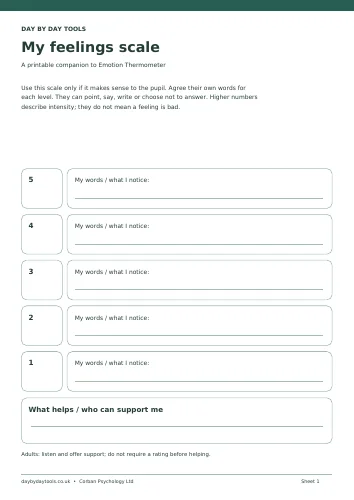
Ask about a specific part of the day rather than demanding a general explanation of feelings. Pictures, choices, ratings or a quiet activity may be easier than direct questioning. Compare lessons, people and times when stress rises. Take changes in behaviour seriously while avoiding diagnosis from a classroom impression.
Plan support before distress peaks
Agree early signs, a discreet request for help and an accessible place or activity that supports recovery. Teach a coping routine while the pupil is settled. Make the return to learning predictable and preserve a trusted relationship. A regulation tool should offer support rather than become a sanction.
A classroom example
A pupil repeatedly leaves during public feedback. Agree private feedback, one manageable correction and a way to ask for a short pause. Afterwards, ask whether the pupil can return and continue, and whether understanding improved. Counting fewer exits alone misses the quality of the learning experience.
Know the limits of classroom support
Follow safeguarding procedures immediately where there is a concern about harm or safety. Involve the SENCo, family and appropriate services when difficulties are persistent, worsening or substantially affecting daily life. Do not require disclosure of private experiences in front of others.
Further reading
EEF: Special Educational Needs in Mainstream Schools · SEND Code of Practice
General guidance for school staff. Apply professional judgement, current school policies and advice based on the individual pupil’s circumstances.